
The Baypen Legacy
Clown in a CornfieldThis flow follows Baypen from the town’s former economic anchor to a damaged emblem commandeered by competing narratives.
increasing Bearing strength in each event
 decreasing
Bearing strength in each eventdecreasingA Company in Decline
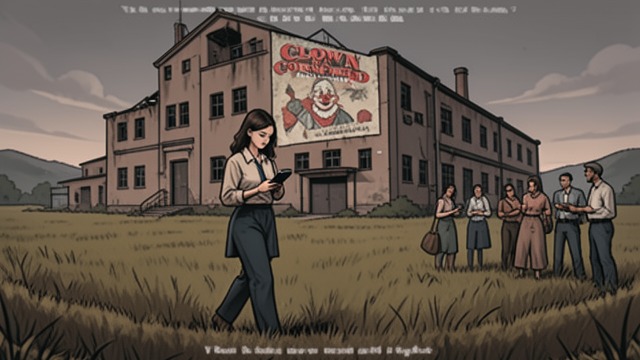
A Company in Decline
A former source of work
Baypen once bought local crops and supported the town’s economic life. Its closure leaves fields, businesses, and residents with fewer reasons to believe prosperity will return.
A visible ruin
The abandoned factory remains prominent on the horizon, bearing the damaged image of Frendo. Its physical decay makes Kettle Springs’ decline visible to newcomers like Quinn.
Fire and Blame
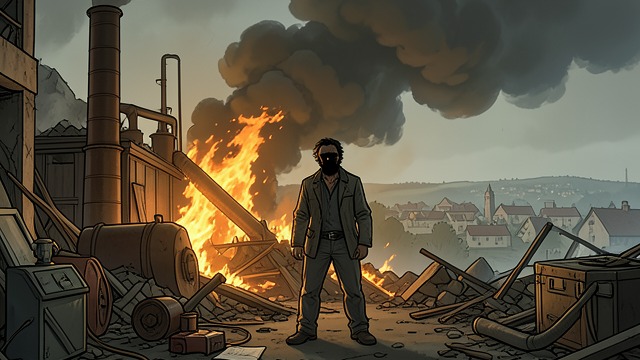
Fire and Blame
A family-owned site burns
Cole admits that he caused the factory fire after drinking too much. He does not regret the destruction, viewing the abandoned structure as a reminder of a past he cannot restore.
A town’s grievance deepens
Although the factory was empty, the fire becomes a source of anger and an additional grievance against Cole. Its damaged remains later serve as the conspirators’ chosen stage.
A Stage for the Plot
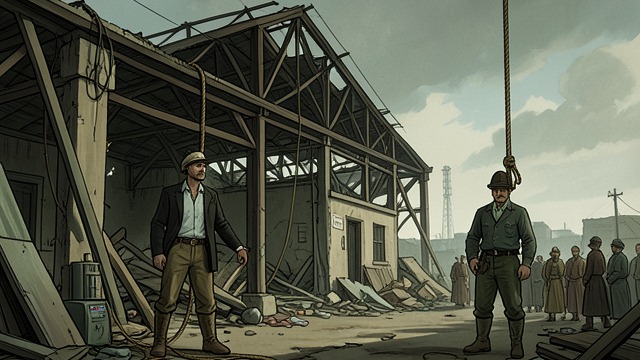
A Stage for the Plot
The factory’s symbolic use
Dunne takes Cole to Baypen, where the surviving structure can support a staged hanging and a false suicide account. The old company’s image gives the plan an appearance of historical inevitability.
The legacy turns against its owners
Quinn, Rust, and Glenn converge on the factory and disrupt the execution. Baypen no longer supplies the conspirators’ desired ending; it becomes the place where their scheme is defeated.
before the story’s present
the week before Quinn’s arrival
near dawn on the night of the massacre
